





Author:Cold Wind Meta
Author: Zhang Feng
Recently, discussions surrounding the regulation and development path of stablecoins have intensified among domestic industry, policy, and academic circles. Wang Yongli, former vice president of the Bank of China, publicly stated that China should be wary of the risks associated with stablecoins, emphasizing that "it is not advisable to vigorously develop stablecoins pegged to fiat currencies."His views have attracted attention within the industry.
In today's rapidly evolving global digital currency landscape, viewing stablecoins solely from the perspective of risk control might cause us to miss crucial strategic opportunities. Considering the recent coordination meeting on virtual currency work held by thirteen ministries and the related policy logic, China's thinking on stablecoins may require a more comprehensive, flexible, and forward-looking perspective.
I. The Potential for Developing Non-USD Stablecoins: The Key Lies in the Ecosystem, and China Still Has an Advantage
Wang Yongli believes thatThe stablecoin market is dominated by USD stablecoins, leaving limited room for the development of non-USD stablecoins.However, this judgment overlooks the "ecosystem attribute" of stablecoins. The value of stablecoins lies not only in their stability pegged to a specific fiat currency, but also in the payment scenarios, financial infrastructure, and business ecosystems they rely on.
China boasts the world's most complete manufacturing supply chain, the largest e-commerce network, and a leading mobile payment penetration rate. In areas such as cross-border trade settlement, supply chain finance, and cross-border e-commerce payments, the development of a stablecoin backed by the RMB and based on China's business ecosystem could potentially pave a new path distinct from the dollar system. Particularly in regions along the Belt and Road Initiative and within the Regional Comprehensive Economic Partnership (RCEP) area, there is a strong demand for efficient and low-cost digital payment tools in physical trade, providing fertile ground for a RMB stablecoin.
Rather than saying there's "limited room for growth," the key lies in whether China can transform its advantages in the real economy network into advantages in the digital currency ecosystem. Giving up on exploration simply because US dollar stablecoins currently hold a leading market share is tantamount to handing over the potential power to set future rules for digital finance.
II. US Stablecoin Legislation: Numerous Problems, But Competition Has Already Begun Overseas
Wang Yongli believes thatThe legislation on stablecoins in the United States still faces many problems and challenges.Indeed, the United States is currently at the forefront of stablecoin legislation, with regulatory frameworks at the state and federal levels gradually emerging as they are developed. However, the legislative process has also revealed many problems, such as fragmented regulatory authority, high compliance costs, conflicts with the existing banking system, and an unclear balance between consumer protection and systemic risk.
Observing first, letting the US explore and learn from its mistakes, is indeed a rational choice for China. However, this does not mean we should simply wait and see. The competition among stablecoins is essentially a competition in the global market, especially in overseas markets and offshore scenarios. The acceptance of different stablecoins depends on their convenience, credibility, and ecosystem cooperation.
Without fully opening its domestic market, China can support Chinese institutions in issuing and using stablecoins pegged to the RMB or other baskets of currencies in overseas markets that comply with local laws, thus enabling them to compete with mainstream international stablecoins. For example, in financial centers such as Hong Kong, Singapore, and the Middle East, China can promote the application testing of compliant RMB stablecoins in scenarios such as trade finance and asset transactions, accumulating experience and a user base.
III. Risk of Legislative Backlash: Mainland China Temporarily Suspends, Hong Kong Takes the Lead – A Strategic Approach with Room for Retreat
Wang Yongli believes thatStablecoin legislation could severely undermine stablecoins.The subtext might be,If China were to legislate on stablecoins, it might actually encourage their disorderly expansion and even disrupt the existing monetary system. While this concern has some merit, completely avoiding regulation and innovation because of this is not the best approach.
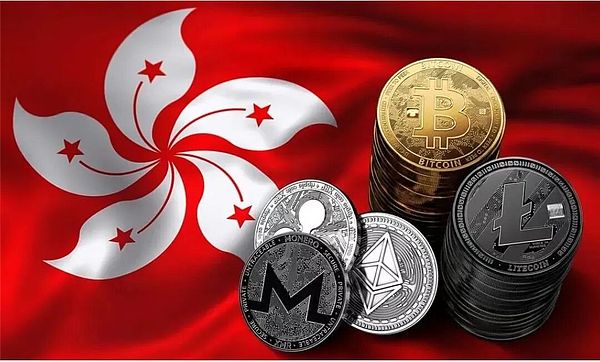
China's strategic choices have demonstrated flexibility: the mainland maintains a cautious approach to private stablecoins and has not yet opened up related businesses, while Hong Kong is actively promoting the development of a regulatory framework for stablecoin issuance, attempting to issue a "Hong Kong dollar stablecoin," and exploring digital asset trading. This differentiated arrangement under the "one country, two systems" framework has precisely created a testing ground where one can proceed or retreat as needed.
As an international financial center with a sound legal system and free flow of capital, Hong Kong is an ideal location for a regulatory sandbox experiment on stablecoins. This would allow for the accumulation of regulatory experience and control of risks from spreading to the mainland. If the experiment is successful, it can provide a reference for the mainland; even if significant risks arise, it will not affect the mainland's financial stability. Therefore, concerns about a potential backlash from the Legislative Council may underestimate China's flexibility in institutional design and its risk management capabilities.
IV. To Follow or Not to Follow? Stablecoins do not belong to any country; the ecosystem determines their ownership.
Wang Yongli believes that "China should not follow the path of stablecoins taken by the United States.The viewpoint that "stablecoins have strong American characteristics" implies a premise: that stablecoins have strong American characteristics. But in reality, as a technology-driven financial instrument, the characteristics of stablecoins are largely determined by the issuing entity, the use case, and the governance structure.
Even with dollar-denominated stablecoins, if they are issued by non-US institutions and form an ecosystem in a specific region, their benefits and influence will be diverted. In other words, "whoever issues the stablecoin controls its ecosystem." For example, if an Asian financial institution issues a dollar-denominated stablecoin and it is widely used in trade within Asia, then the stablecoin serves the regional economic cycle more than it necessarily strengthens US monetary hegemony.
For China, the key is not whether to "follow" or "disobey" the path of any other country, but whether it can create an independent, controllable stablecoin product and ecosystem that complies with international rules, based on its own needs and stage of development. For example, the digital yuan (e-CNY), as a legal digital currency, is primarily positioned for domestic retail payments and cross-border pilot programs; while RMB stablecoins can focus on cross-border wholesale, offshore markets, and specific business scenarios, forming a complementary rather than substitutive relationship. Of course, the specific development model can be further explored.
V. Is inaction also a cost? Leaving strategic space in global competition.
In an era of global competition, financial discourse power is closely linked to the dominance of payment infrastructure. If China is completely absent from the rapidly growing stablecoin market, several consequences may result:
First, the cross-border payment system is becoming increasingly reliant on the US dollar stablecoin, deepening the "path dependence" of the RMB in the digital field; second, it has missed the opportunity to export Chinese technical standards and business rules through the digital currency ecosystem; and third, it has become passive in the future formulation of global digital currency rules.
Therefore, a more balanced strategy is:Allowing adequate room for the development of digital yuan, USD stablecoin, and yuan stablecoin.As a digital form of legal tender, the digital yuan should be steadily promoted, especially by accumulating experience in international cooperation projects such as the mBridge for cross-border payments. As for RMB stablecoins, under the premise of controllable risks, they can be piloted in offshore markets and specific trade scenarios, and synergistically integrated with the digital yuan.
VI. Halt or Strategic Risk Management?
Mr. Wang Yongli's warnings about the risks of stablecoins are of significant value, especially regarding financial security and monetary sovereignty. However, in the rapidly changing landscape of digital finance, emphasizing risks while ignoring strategic opportunities could cause China to lose its initiative in the next round of financial infrastructure reform.
The establishment of the thirteen-ministry coordination mechanism for virtual currency work demonstrates that China is attempting to address the challenges and opportunities brought by digital currencies in a more systematic and coordinated manner. The next step should perhaps be to build upon this foundation to formulate a more forward-looking stablecoin development strategy.
Clearly distinguish between domestic and overseas, onshore and offshore policiesDomestically, private stablecoins are strictly controlled, while overseas, compliant innovation is encouraged.
Support Hong Kong in becoming an international innovation hub for digital assets and stablecoins.And strengthen regulatory cooperation and experience sharing with them.
Encourage enterprises to pilot RMB stablecoins overseas, leveraging real-world trade scenarios., and gradually build an ecosystem.
Strengthen international cooperationActively participate in the formulation of international stablecoin regulatory standards and promote the establishment of a diversified global digital currency system.
Time flows like a river, never ceasing day or night. One cannot jump into the same river twice. While mitigating risks, exploring the strategic value of stablecoins with greater wisdom and courage may be key to China's continued competitiveness in the digital finance era. Wang Yongli's explanation is an important reminder, but the Chinese story about stablecoins may require a broader narrative.